Sunday, May 1, 2016

Politicians and Language

Question 4- Write an essay in which you support, challenge, or qualify Lakoff's assertion that language is important when politicians are presenting ideas to society rather than the simply the substance of the ideas.

Politicians often manipulate the language they use in order to help sway more people to vote for them. One example as stated by the Institute for Propaganda Analysis is the use of name calling. With the upcoming presidential election, the most blatant example of this is between Donald Trump, Ted Cruz, and Marco Rubio. They call each other names such as "a little baby" and "a nasty guy" in order to "appeal to [voters] hate and fear" (Institute for Propaganda Analysis). By calling each other names, they make the other candidates appear less qualified while making themselves look better. Another example of choosing certain words can be expressed by political consultant Frank Luntz. He claims that "a single word or phrase can undermine or destroy the credibility of an otherwise successful pitch or presentation" (Luntz). Furthermore, he provides examples that show words that shouldn't be used and what should replace them. For example, instead of "foreign" he suggested using "international," or instead of saying "drilling for oil," one could say "exploring for energy." Some may say that these "phrases [are] eerily reminiscent of the euphemisms coined by the government" (Kakutani), but whether they are for good or for bad, it is evident that politicians use them often. Their purpose of manipulating language in addition to giving the substance of the ideas is because "people are very,very touchy about their relationships" (Pinker). Politicians work to ensure that their relationships with the voters are maintained in a healthy state. Whether it's Hilary Clinton trying to get the young vote or Ben Carson attempting to connect with the black community, the goal of politicians is to try and receive the most votes, so they try not to fully alienate too many groups. By using language that isn't too strongly favored toward any side, they can use calculated ambiguity to help with their cause.


Sunday, April 17, 2016

Persuasive Prompt 1


  H. L. Mencken, an American essayist, claims that "The average man does not want to be free. He simply wants to be safe." I agree with the statement in that people are valuing safety and security over the ability to do whatever they please.
  Laws are a very transparent medium that display how society values its safety. The majority of laws are created, at the expense of society's freedom, to ensure that the nation remains safe. From the smallest driving violation to the Patriot Act, all of these laws work to ensure that citizens can live in harmony with those both inside and outside the United States.
  Financial security is another example of valuing security over the risks associated with freedom. A majority of people would not spend a lot of money gambling in casinos because the odds of winning are so slim. Heck, few people would be confident in investing their savings into stocks, which with lots of analyzing can lead to some very convincing trends, because the small risk associated with it outweighs all the potential gains. Deciding not to buy something expensive in fear of not being able to pay for it is also an example of limited freedom. Choosing financial security limits one's freedom in the ability to purchase whatever he or she pleases.
  There are people who argue that there are actually people who strive for that adrenaline rush associated with the idea of doing whatever he or she wants; however, they fail to take into account that those people are only a small fraction of the entire society. Also, some of those people who value their freedom too much can become criminals due to a lack of restraint.


Image result for freedom or safety

Sunday, March 27, 2016

Chinese Education


First Grade
     I sat alone on the bench at recess, reading a Harry Potter book. The other boys laughed at me. They stole my book and began to play monkey in the middle, tossing the book just beyond my outstretched fingers. My Chinese name was Dum Gai, Sometimes it was Wai Yu So Tan or Yu Stin Ki Pu. One day I had enough of their taunting and punched a boy named Austin and left bruises on his face. It almost looked like he was wearing face paint for a Chinese opera.

Second Grade
     Marcella Gavelis made me stay in for recess ten day straight.
     "Say you're sorry," she said.
     "For what Miss. Gavelis?"
     "Everything," she said and made me hang from a pull-up bar, monkey style for 15 minutes. I learned that all the blood rushing into my head can make one pretty dizzy.
     Once, she gave the class a math test but set me aside and gave me a test that was for students in Algebra. When I answered all the questions correctly with work included, she made me mark every answer wrong.

Third Grade
     My traditional Chinese music career began and ended with my very first instrument: the Dizi.
     As I walked around the classroom playing my music, Mrs. Olken stopped my playing and confiscated my instrument because my music was too oriental.
     In third grade, though, I stood alone in the corner, faced the wall, and waited for the punishment to end.
     I'm still waiting.

Fourth Grade
     "You should be an engineer when you grow up," Mr. Olken told me.
     "Why should I be a doctor?" I asked Mr. Olken.
     "So you can go back to China and help the country. So you can develop more efficient technology and reduce pollution."
     That was the year that my father smoked ten packs of cigarettes a day and the same year that my mother started three hundred different Chinese calligraphy paintings but never finished any. They stayed in different rooms in our house and cried savagely.
     I ran home after school, heard their Chinese tears, and looked in the mirror. Engineer David, I called myself, invented an education, talked to my reflection. Engineer David to the CEO's office.

Fifth Grade
     I jumped in the pool for my first time and swam across the entire pool. No. I didn't make it across the pool, almost drowned actually, and the life guard had to jump in an save me.
     But it felt great, my body slicing through the water. It was science, surface tension. It was beautiful.
     At the same moment, my cousin Keene Lum swallowed LSD from the bottle. His ears rang, his mouth was dry, and everyone seemed so far away.
     But it felt great, that buzz in his head, all the colorful sights and sounds. It was chemistry, biology. It was beautiful.
    Oh, do you remember those sweet almost innocent choices that Chinese boys were forced to make?


Saturday, March 19, 2016

Political Cartoon


In this political cartoon, it is arguing how the wealth distribution in the United States is very skewed and unfair. The title shows that it is supposed to represent America. The groups are divided into the rich, the middle class, and the poor. It also portrays the US government as an elephant wearing a towel that says GOP, which stands for the Grand Old Party, in order to show that it is republican. The political cartoon clearly shows that the rich are getting most of the wealth while the middle class receives just a slice of the pie and the poor just gets crumbs. The wealth distribution is also displayed by the drinks that each group has. The rich received coffee, the middle class receives a glass of milk, and the poor simply receive a glass of water in a Dixie cup. The comment that the elephant makes serves to display how the government took extra means in order to further help the rich by offering things such as tax loopholes and benefits; however, they don't provide anything that could be used by the middle class or the poor to even out the wealth distribution. Furthermore, the cartoonist emphasizes the power that the rich have by placing him on an almost throne-like chair. This illustrates the power that the rich have over the rest of the population. Many stereotypes are also show in this political cartoons. The poor are shown as a black family without a father, the middle class is drawn as a standard white family with two kids, and the rich class as portrayed as a typical white male. 

Sunday, March 13, 2016

Restraint


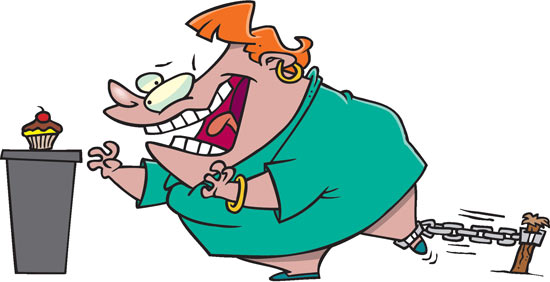
Growing up, we are always told that we can't always have what we want. We are taught how to restrain ourselves. It is the reason why we don't eat candy and cupcakes for breakfast, it is the reason why we don't blurt out every mean comment that comes across our mind, and it is the reason why we don't spend days lying in bed binge-watching Netflix (sorta). In his piece, "A Measure of Restraint," Chet Raymo illustrates how "an integrity and balance within nature that demands of earth's dominant species a judicious self-restraint" is needed if humans are to live on, but not destroy, the earth. He provides numerous examples where people lack restraint and come to conclusions even when they don't have all the information. His examples include unnamed "young men" as well as famous scientists such as "Marie and Pierre Curie." He does this to show how everyone in society can be affected if their urges are left unchecked. Raymo also shows how history repeats himself with these examples and uses a poem that contains repetition, "she died a famous woman denying her wounds denying her wounds came from the same source as her power," in order to emphasize this point.  It can still be seen today when society, myself included, just mindlessly falls into the current popular trends even if we don't necessarily know what it is for or why it is done. Hopefully, society begins to understand what Raymo is asking for, and we refrain from habitually giving in to our temptations. Sometimes it is better just to let the mystery remain a mystery. 


Sunday, March 6, 2016

Puzzle Paragraph


Earlier this week we read a piece by Virginia Woolf called "The Death of the Moth." In it, she discusses the battle between life and death of simple moth. The moth is portrayed like a Lone Ranger, just him versus death; however, despite the odds, Woolf gives the moth some fire in its fight and characterizes it as "nothing but life".  While others might say the battle is like gambling at the casino, where the winner is based on luck, Woolf claims that death is undoubtedly stronger than life. This claim can also be linked to her depression and eventual suicide "in 1941." However, it is not fair to allow profiling to occur and only put her in the group of depressed people because she was a remarkable writer. In fact, she is "generally regarded as one of the greatest twentieth-century writers."  Another thing we read this year that undermines profiling was the memoir that Jeanette Walls wrote about her life. In it, she writes about how she grew up homeless, yet was able to overcome the challenges that were thrown at her and obtain the life that she desired. Walls's emotional story helps inspire people to look at more than just the negative things associated with certain groups of people.
On the surface, both Walls and Woolf seem have remarkable stories that are somewhat overshadowed by negative things in their lives; how after diving deeper into their stories, it can be seen that these things only add to show how much they achieved.


Image result for death of a moth.

Sunday, February 28, 2016

Life of a Swimmer


News in Brief
February 28, 2016

VOL 64 ISSUE 13
Sports Michael Phelps


Image result for michael phelps


BALTIMORE, MD- Here we have esteemed swimmer and 22 time Olympic medalist Michael Phelps with us to talk about his life in swimming. We asked him why he loves swimming so much and what drives him to be the best each and every day. His response was, "I just love looking at the black lines at the bottom of the pool. The way they intersect at various points is just mesmerizing." USA Swimming also conducted a survey among swimmers throughout the country to ask what their favorite thing about swimming is. The results were astounding. 52% said it was so they could eat more food, 22% said it was so they could have something to do at 5 in the morning, 13% said it was so they can use chlorine as a perfume, 7% said it was so they never have to shower at home, 4% said it was so they could have bleached hair and goggle marks, and 2% marked down other as their answer choice. Phelps also added, based on personal experience, "Hopefully in the future, pool makers will create even more interesting designs on the bottom, so I can stare at them as I swim back and forth across the pool!" He hopes that his opinions as well as the survey helps to explain to others why swimmers love what they do so much.

SHARE THIS STORY:     Image result for small facebook logo Image result for small twitter logo